How to Prepare for Ministry: A Biblical Guide for New Ministers
It is among the most significant steps that a true believer could take when answering God’s call to ministry. Whichever way you may be intending
I’ve sat across from a young man in a church office who looked me dead in the eye and said, “I believe in Jesus. Why isn’t that enough?” It’s a fair question. It’s also one of the most misunderstood questions in the church today.
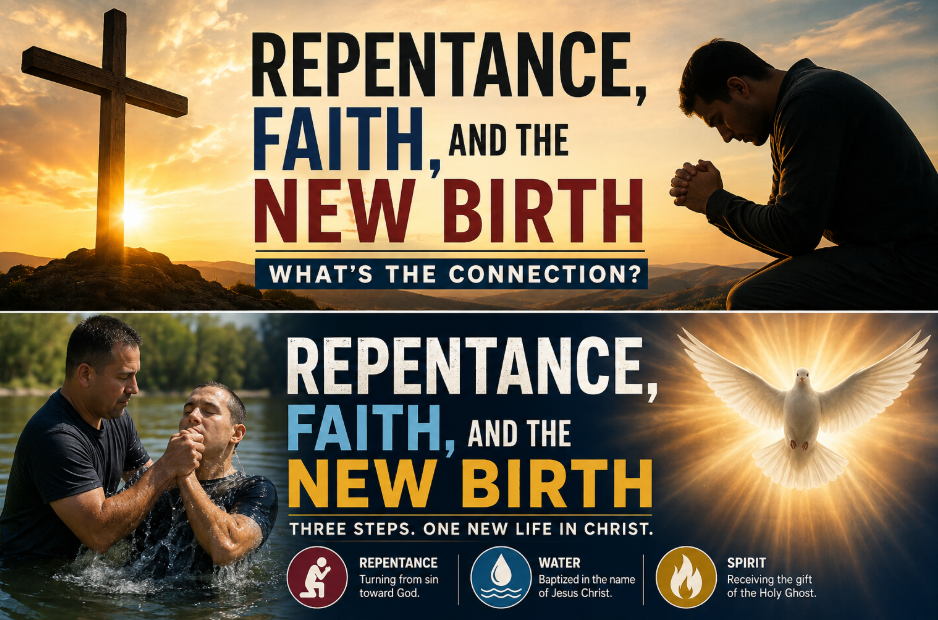
Somewhere along the way, a lot of believers were taught that faith is a single moment – a decision, a prayer, a raised hand at an altar call – and that’s the whole story. But when you actually walk through the book of Acts, you find something different. You find a pattern. Repentance, faith, and the new birth aren’t three separate events competing for attention. They’re three parts of one work God does in a person.
Faith gets you to the door. It doesn’t walk you through it.
Hebrews 11:6 says without faith it’s impossible to please God – that whoever comes to Him must believe He exists and that He rewards those who diligently seek Him. That’s the starting line. Faith is what makes a sinner willing to listen to the gospel instead of walking away from it.
But here’s what I tell people in premarital counseling, membership classes, and every new believer I’ve ever mentored: faith that stops at belief is faith that stops short. James put it bluntly – even the devils believe, and tremble (James 2:19). Believing facts about Jesus isn’t the same as being born again. Faith is the engine. Repentance and the new birth are where that engine actually takes you somewhere.
When Peter stood up on the Day of Pentecost and preached that first apostolic sermon, the crowd didn’t ask him a theological question. They asked, “What shall we do?” (Acts 2:37). That question is what real faith produces – conviction that demands a response.
Peter’s answer wasn’t “just believe harder.” It was specific: “Repent, and be baptized every one of you in the name of Jesus Christ for the remission of sins, and ye shall receive the gift of the Holy Ghost” (Acts 2:38).
Repentance is faith turning around. It’s not just feeling bad about sin – plenty of people feel bad about sin and keep living in it. Real repentance is a change of direction. It’s the prodigal son coming to himself in the pig pen and getting up to go home (Luke 15:17-18). You can’t manufacture that with willpower alone, and you can’t fake it in front of God. It’s faith proving itself real by moving.
I’ve watched people repent in a church service with tears running down their face, and I’ve watched people repent quietly, alone, weeks after they first heard the gospel. It doesn’t always look the same. But it always moves in the same direction – away from self, toward obedience.
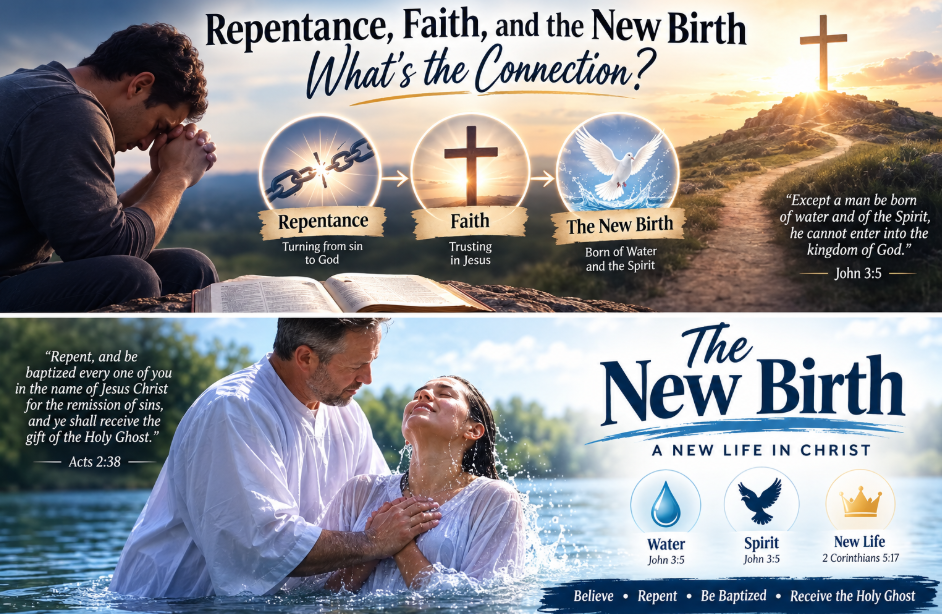
Here’s where a lot of church background gets it wrong: the new birth isn’t a metaphor for “feeling different” after a decision. Jesus told Nicodemus plainly, “Except a man be born of water and of the Spirit, he cannot enter into the kingdom of God” (John 3:5).
Water and Spirit. Two elements. Not optional extras – the actual new birth experience.
That’s why Peter’s Acts 2:38 sermon lines up perfectly with John 3:5. Repentance addresses the heart. Baptism in the name of Jesus Christ (not as a ritual, but as an act of obedient faith) addresses the water. And the infilling of the Holy Ghost, evidenced the same way it was on the Day of Pentecost, addresses the Spirit. Three pieces, one new birth – and none of them are decoration. Each one is doing something faith alone can’t do on its own.
This is exactly what I unpack more fully in Understanding the New Birth – because I’ve found that most people haven’t rejected this truth. They’ve simply never had someone sit down and walk them through it slowly, the way Philip did with the Ethiopian eunuch on that desert road (Acts 8:35-38).
Maybe you’ve been sitting in church for years, and somewhere in the back of your mind you know you believe – but you’ve never actually repented of something you’re still holding onto. Or maybe you repented once, cried at an altar, and never went any further with obedience.
Faith without repentance stalls. Repentance without the new birth is incomplete. And a “new birth” experience without genuine faith and repentance underneath it is just religious activity. God designed these three to work together, not to be picked apart and served individually like items on a menu.
If you’re a young believer trying to sort this out, don’t rush past the process to get to a feeling. If you’re a leader discipling someone new, don’t hand them a shortcut version of the gospel because the full version feels like too much to explain in one sitting. This is exactly the gap Operation Close the Back Door exists to close – helping people not just walk through the door of salvation, but actually stay rooted once they’re inside it.
It is among the most significant steps that a true believer could take when answering God’s call to ministry. Whichever way you may be intending

It has always been hard being a parent, but today’s fast-paced culture offers its own set of difficulties to Christian parents. Their kids are growing

To follow Jesus Christ means more than having the correct set of beliefs it also means emulating Him every day. The Bible states that God
Going to church is an essential aspect of the life of a Christian. It provides the opportunity to worship, have fellowship with others, listen to

You sit at the table staring at the board. The pieces are still. One move feels right in your gut. Another looks safer on paper.
I’ve sat across from a young man in a church office who looked me dead in the eye and said, “I believe in Jesus. Why